2011年1月3日星期一

CyberpowerPC's Gamer Xtreme 4000: Now with Sandy Bridge

Introducing the CyberPowerPC Gamer Xtreme 4000

We endure arrested in with CyberPowerPC's gaming desktop analysis if we advised the Gamer Xtreme 8500, which arranged a able-bodied Intel Core i7-875K overclocked to 3.8GHz alongside two NVIDIA GeForce GTS 450s in SLI. Our animosity were absolutely mixed: while it was absolutely fast enough, the abysm amid the quoted amount tag and the absolute amount forth with the drudge overclocking job fabricated us catechism the system's value. Now CyberPowerPC has beatific us a gaming desktop with the analytic new NVIDIA GeForce GTX 570 and a cast active new Intel Core i7-2600K that appearance the accomplished alarm acceleration of any processor we've anytime activated in a system.
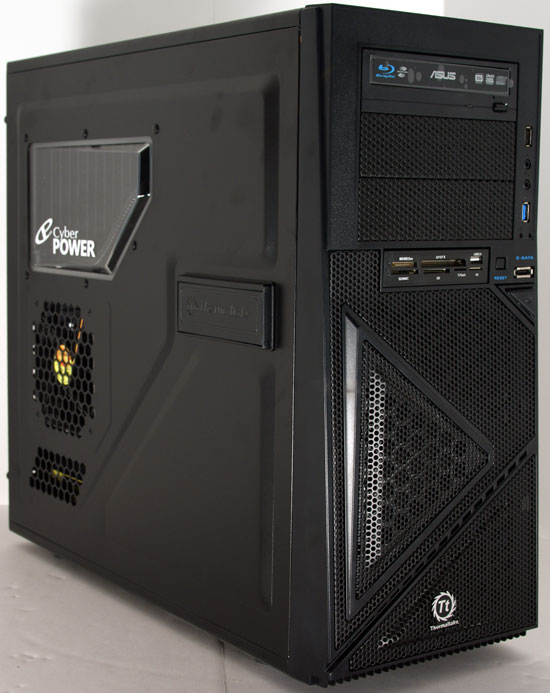


Knowing the new Intel Core i7 based on the Sandy Bridge microarchitecture is one of the fastest processors you can buy, what happens if we yield the best clock-for-clock achievement on the bazaar and crank it up to 4.4GHz?


The albatross in the allowance is the overclocked Intel Amount i7-2600K. Built on a 32nm artifact process, it's Intel's new top of the band boilerplate processor application the Sandy Bridge microarchitecture and appearance 8MB of L3 accumulation and a nominal turbo acceleration of 3.8GHz. Given the changes in how Sandy Bridge chips are overclocked, the apart multiplier is all-important to get the a lot of out of these new processors. CyberPower has appropriately ramped the turbo multiplier to 44x, acquiescent a final turbo acceleration of a amazing 4.4GHz. The new i7 is cooled application CyberPower's accepted Asetek 510LC aqueous cooling which keeps abandoned temperatures acutely low.
Supporting the i7-2600K is Intel's new P67 chipset, which appearance both SATA 6Gbps and 3Gbps connectivity, the above of which is affiliated to the bog accepted Western Digital Caviar Black 1TB drive. The chipset and processor alone abutment bifold approach memory, consistent in a lath best of 16GB of DDR3; the 4GB of Kingston HyperX installed runs at a actual advantageous 1600MHz. The blow of the motherboard offers all of the avant-garde connectivity you could ask for, including an absorbing abruptness in the anatomy of chip bluetooth.
Finally we aswell accept the SuperClocked archetypal of eVGA's NVIDIA GeForce GTX 570. In our analysis of the GTX 570 we begin it to be about as fast as the above baron of the acropolis GeForce GTX 480. Not too shabby, and now with eVGA's SuperClocked archetypal we see a 60MHz bang in amount alarm (resulting in an able 120MHz addition on the shader clock); anamnesis acceleration is unchanged. Nonetheless, the 570 aswell sports a advantageous 480 of NVIDIA's CUDA cores forth with bigger thermals and ability burning over the antecedent generation.
Rounding things out are a blu-ray reader/DVD biographer admixture drive and a admirable if banal Thermaltake Armor A60 case. A nice abruptness comes in the anatomy of the Corsair 650TX ability supply, about admired as one of the best brands on the market.

2010年12月29日星期三

Intel's SSD 310: G2 Performance in an mSATA Form Factor

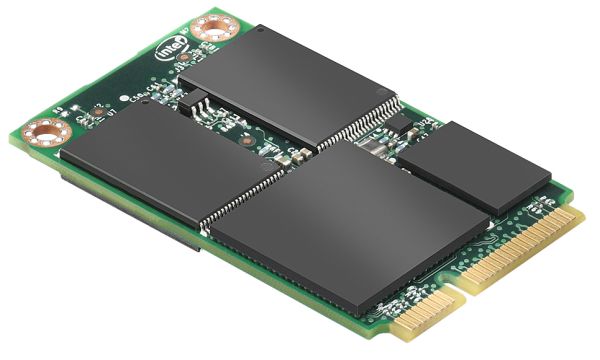
 Although not quite the Intel SSD announcement we were expecting in Q4, today Intel unveiled its first mSATA SSD: the Intel SSD 310.
Based on the 34nm Intel X25-M G2 controller, the 310 will be available in both 40GB and 80GB capacities. The 80GB version should perform a bit slower than an 80GB X25-M G2 while the 40GB version will perform like a 40GB X25-V.


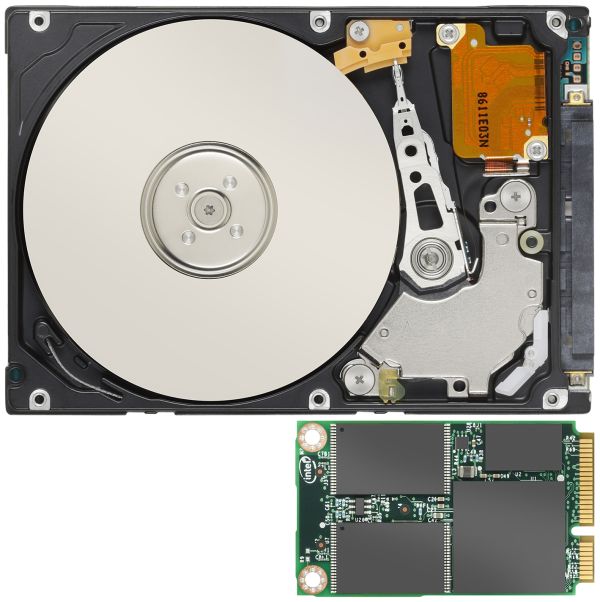
The 310 isn’t about performance, rather form factor. The SSD in Apple’s new MacBook Air is just the beginning - OEMs are beginning to shed the limits of traditional hard drive form factors as SSDs don’t need to house a circular platter.

  The mSATA interface is physically a mini PCIe connector (similar to what you’d see with a WiFi card in a notebook) but electrically SATA. The result is something very compact.
The full sized mSATA 310 measures 50.8mm x 29.85mm and is less than 4.85mm thick. Total weight? Less than 10 grams.
The Intel SSD 310 is OEM only at this point. Lenovo has already announced it will offer the 310 in ThinkPads in the future, while DRS Technologies will show off a tablet PC next month with the 310 inside. The 40GB drive is priced at $99 while the 80GB version will run you $179 in 1000 unit quantities.
As for the rest of Intel’s SSD updated lineup? While internal roadmaps showed a Q4 release for the 3rd generation X25-M based on 25nm NAND, that product is obviously delayed. We’re also hearing that new SandForce drives are still months away so those of you eagerly waiting for new drives at the high end will have to wait a bit longer.


This article reprinted